When parents picture quiet time, they often imagine a child peacefully flipping through books, building with blocks, or quietly coloring.
But what if your child wants to listen to an audiobook instead?
Does it still count as quiet time?
The short answer is yes—if it supports the purpose of quiet time.
Audiobooks can be an excellent quiet time activity when they’re used intentionally. They encourage imagination, language development, and independent play without the fast-paced stimulation that often comes from screens.
In our home, I’ve found that audiobooks and simple audio stories can actually extend quiet time because they give my child something gentle to focus on while she builds, draws, or simply rests.
Let’s look at when audiobooks work well—and when they might not.
My post contains some affiliate links so if you make a purchase after clicking on a link I may receive a commission but it will not cost you anything. Read my disclosure here.
What Is the Goal of Quiet Time?
Before deciding whether audiobooks belong in your quiet time routine, it helps to remember why quiet time exists in the first place.
Quiet time isn’t just about keeping children occupied.
It’s about helping them:
- Rest their minds and bodies
- Practice independent play
- Reduce overstimulation
- Learn to entertain themselves
- Recharge after a busy morning
If an audiobook supports those goals, then it’s perfectly reasonable to include it.
If you’re just getting started, read Quiet Time Rules for Toddlers (How to Start Quiet Time That Actually Works) and How to Create a Quiet Time Space for Toddlers for a solid foundation.
Yes, Audiobooks Still Count
Many parents worry that listening isn’t “real reading.”
But listening to stories exercises many of the same language skills as being read aloud.
Children listening to stories are still:
- Building vocabulary
- Learning sentence structure
- Improving listening comprehension
- Following plots
- Expanding imagination
- Developing attention span
The biggest difference is that they’re processing language through their ears instead of their eyes.
For preschoolers who can’t yet read independently, audiobooks provide access to stories they couldn’t enjoy on their own.
Do Audiobooks Count as Reading?
This question comes up often.
While listening to an audiobook isn’t exactly the same skill as decoding printed words, research suggests children still gain many literacy benefits from listening to stories.
Audiobooks help children:
- Hear fluent reading
- Learn new vocabulary
- Understand story structure
- Build background knowledge
- Strengthen comprehension
- Develop a love of books
Many educators recommend combining audiobooks with physical books whenever possible so children can follow along with the pictures.
Why Audiobooks Work So Well During Quiet Time
Unlike television, audiobooks don’t constantly provide visual input.
Instead, children create the pictures in their own minds.
That means they can continue:
- Coloring
- Building
- Drawing
- Playing with dolls
- Looking through books
- Completing puzzles
while listening.
This combination keeps their bodies busy while allowing their brains to slow down.

Audiobooks Encourage Imaginative Play
One unexpected benefit is that stories often inspire richer independent play.
Instead of watching characters move on a screen, children invent the scenes themselves.
You might notice your child:
- Acting out parts of the story
- Building houses for characters
- Pretending to be different animals
- Creating new endings
This kind of imaginative play is exactly what many parents hope quiet time will encourage.
Independent play helps children develop creativity, problem-solving skills, and confidence.
Are Audiobooks Better Than TV During Quiet Time?
Every family is different, but if your goal is a calm, low-stimulation quiet time, audiobooks are generally a better fit than television.
| Audiobooks | TV |
|---|---|
| Encourages imagination | Provides constant visuals |
| No flashing images | High visual stimulation |
| Allows independent play | Often stops independent play |
| Supports language development | Can encourage passive watching |
| Easier transition afterward | May cause resistance when turned off |
That doesn’t mean television is always bad—but it serves a different purpose than quiet time.
What About Story Podcasts?
Absolutely.
Many story podcasts work beautifully during quiet time.
Look for stories that are:
- Calm
- Slow-paced
- Age appropriate
- Without loud sound effects
- Without constant background music
Gentle storytelling tends to keep children relaxed rather than excited.

Best Ways to Use Audiobooks During Quiet Time
Audiobooks work best when they’re just one part of quiet time—not the entire activity.
Try pairing them with:
- Building blocks
- Magnetic tiles
- Coloring
- Water Wow books
- Puzzles
- Dolls
- Quiet sensory bins
- Stuffed animals
- Play silks
- Wooden trains
If you’re looking for more calm play ideas, you’ll also enjoy:
- 25 Best Quiet Time Toys for Toddlers (That Won’t Overstimulate)
- 15 Quiet Time Activities for Toddlers That Actually Work
- Quiet Time Basket Ideas for Toddlers (Easy Setups That Actually Work)

Make Quiet Time Easier
Grab my free Quiet Time Starter Kit with printable quiet time rules, activity ideas, and tips to help your child play independently.
Where to find Audiobooks
Where to Find Audiobooks for Kids
You don’t need to buy a special audiobook player to enjoy stories during quiet time. There are plenty of ways to find children’s audiobooks, whether you prefer a subscription, free options, or borrowing from your local library.

Audible
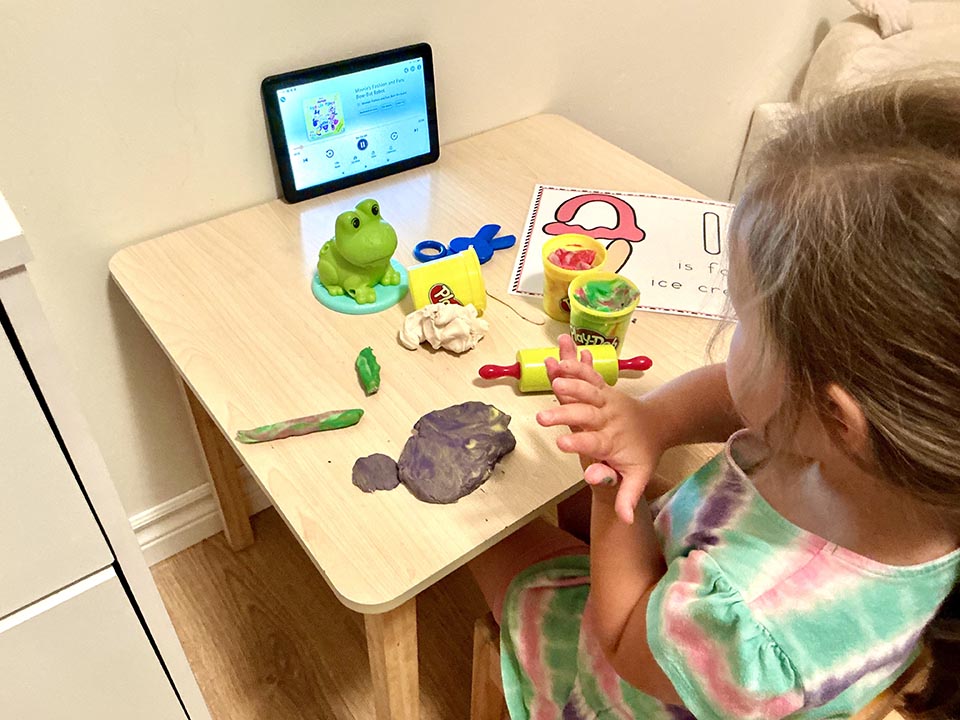
This is what we use most often. Audible has a large selection of children’s books, chapter books, and short character stories. My daughter especially enjoys the Minnie Mouse stories, and because they’re familiar, she’s happy to listen to them over and over again. We simply play them from a tablet, let her look at the book cover for a moment, and then the screen goes to sleep while she listens and plays independently.
Amazon
Many Kindle books and children’s books sold on Amazon also have audiobook versions available. If you discover a book your child loves, it’s worth checking to see if there’s a matching audio edition.
Your Local Library
Don’t overlook your local library. Many libraries offer children’s audiobooks on CD, as well as free digital borrowing through apps like Libby or Hoopla. It’s an easy way to try new stories without purchasing them.
CDs and Read-Along Books
Many picture books are available as read-along sets that include both the book and an audio CD or digital device with buttons. While my 3½-year-old isn’t interested in following along with the pages yet, I still play them as background stories.

Podcasts
If your child enjoys familiar characters, story podcasts can also be a wonderful option. In our house, Paw Patrol and Dora the Explorer podcasts are surprisingly successful during quiet time. Even though they’re more energetic than a bedtime story, they still encourage calm, focused play much more than music does.
Our Approach
We don’t own a Toniebox or Yoto Player. Instead, we use what we already have: Audible on a tablet, library CDs, and occasionally story podcasts. It’s a simple setup that works well for our family, and it reminds me that you don’t need expensive equipment to enjoy the benefits of audiobooks. The best option is the one that fits your family’s budget, your child’s interests, and your daily routine.
When Audiobooks May Not Work
Some children become so excited by dramatic stories that they stop resting altogether.
If your child starts:
- Running around
- Shouting responses
- Acting out every scene
- Constantly changing activities
the audiobook may simply be too stimulating.
Try choosing:
- Shorter stories
- Gentle narrators
- Nature stories
- Bedtime stories
- Classical fairy tales
instead.
Choosing Calm Audiobooks
Not every children’s audiobook is ideal for quiet time.
Look for:
✔ Gentle voices
✔ Slow pacing
✔ Limited sound effects
✔ Positive themes
✔ Short chapters
✔ Familiar stories
Avoid:
- Fast-paced adventures
- Loud character voices
- Constant music
- High-energy comedy
The calmer the audio, the calmer quiet time usually becomes.
Do You Need a Special Audio Player?
Not necessarily.
You can use:
- A Bluetooth speaker
- A phone in airplane mode
- A CD player (if you still have one!)
- A child-friendly audiobook player
Many families enjoy dedicated children’s audio players because kids can operate them independently without access to other apps or screens.
Popular options include:
- Toniebox
- Yoto Player
Our Experience
One thing I’ve noticed with my own preschooler is that audiobooks don’t replace independent play—they often enhance it.
She’ll spend long stretches quietly building, arranging toys, or pretending while listening. The story gives her imagination something to build from without pulling her attention away the way a screen often does.
For our family, audiobooks fit well with the goal of quiet time: creating a calm, restful space where independent play can naturally happen.
I find audiobooks are especially helpful for when I need to help my restless child calm down when I am busy making supper or cleaning. If I set out some watercolor paints, paper, and other craft supplies with an audiobook or music playing in the background it helps her to focus and relax.


