
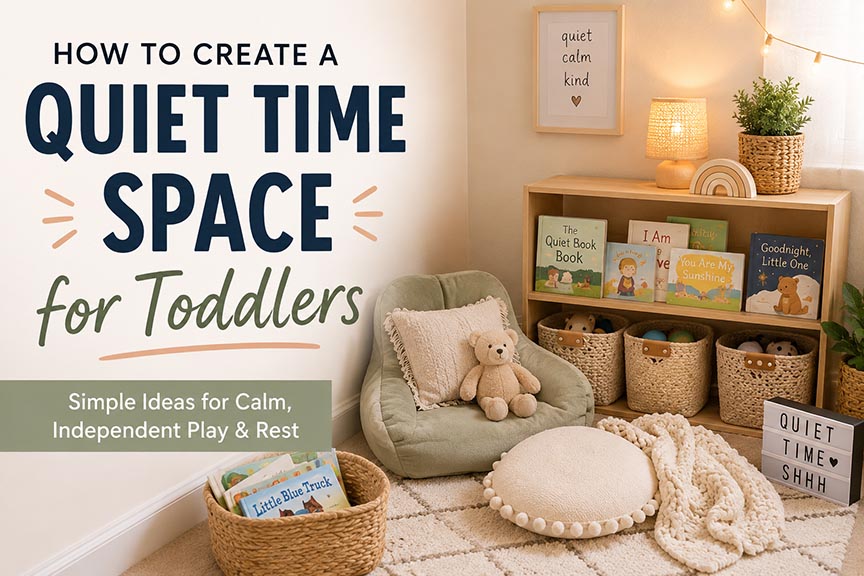
Create a calm, screen-free space your toddler actually wants to use.
If your toddler has stopped napping or fights rest time every day, creating a dedicated quiet time space can completely change your afternoons. A cozy, simple setup helps toddlers feel calm, independent, and secure — while giving parents a much-needed break during the day.

In this guide, you’ll learn exactly how to create a quiet time space for toddlers, what to include, what to avoid, and how to make it work in real life.
My post contains some affiliate links so if you make a purchase after clicking on a link I may receive a commission but it will not cost you anything. Read my disclosure here.
- What Is a Quiet Time Space?
- Why Quiet Time Spaces Work for Toddlers
- Where to Create a Quiet Time Space
- What to Include in a Quiet Time Space
- Quiet Time Favorites We Love
- What NOT to Put in a Quiet Time Space
- How to Set Up the Space Step-by-Step
- Best Quiet Time Rules for Toddlers
- Create a Simple Quiet Time Routine
- How Long Should Quiet Time Be?
- Quiet Time Space Ideas for Small Homes
- Common Quiet Time Mistakes
- Frequently Asked Questions
- Final Thoughts
- Need Help Starting Quiet Time?
- YOU MIGHT ALSO LIKE
What Is a Quiet Time Space?
A quiet time space is a calm area where your toddler can rest, look at books, play quietly, or relax independently for a set amount of time each day.
It’s not punishment. It’s not “go away so mom can clean.”
It’s a predictable, peaceful routine that helps toddlers reset while encouraging independent play.
If your child no longer naps, quiet time can replace nap time while still protecting rest during the day.
If you want to learn more about how to start quiet time read my blog post Toddler won’t Nap? Try Quiet Time Instead!

Why Quiet Time Spaces Work for Toddlers
Toddlers thrive with:
- Predictable routines
- Reduced stimulation
- Cozy environments
- Clear boundaries
- Independent play opportunities
A dedicated quiet time space helps reduce afternoon meltdowns and overstimulation while teaching your child how to play calmly on their own.
According to Zero to Three, independent play supports emotional regulation, creativity, and problem-solving skills in young children.
Where to Create a Quiet Time Space
The best quiet time spaces are:
- Safe
- Simple
- Cozy
- Low distraction
You do not need a Pinterest-perfect playroom.

Good options include:
- A toddler bedroom
- A corner of the living room
- A playroom
- A reading nook
- A sectioned-off area with shelves or a rug
Choose a place where your toddler can safely stay without constant supervision.
What to Include in a Quiet Time Space
Keep it minimal. Too many choices can overwhelm toddlers and lead to dumping toys everywhere instead of calming down.
1. Soft Seating or Cozy Spot
Ideas:
- Floor cushions
- Bean bag chair
- Toddler couch
- Foam mat
- Blanket basket
The goal is comfort and calm. We love using a small toddler chair or floor cushion to make quiet time feel cozy and inviting.
2. Books
Books are one of the best quiet time activities because they naturally slow toddlers down.
Choose:
- Board books
- Lift-the-flap books
- Picture books
- Familiar favorites
Rotate books weekly to keep interest high.
If your toddler isn’t interested in flipping through books on their own than using an audio-book player can help them listen to stories and grow their imagination.

3. Quiet Time Basket
A quiet time basket gives toddlers special activities they only use during quiet time.
Include:
- Water wow books
- Reusable sticker books
- Felt boards
- Magnetic tiles
- Stuffed animals
- Puzzles
- Coloring supplies
- Lacing cards
Water wow books and mess free markers are some of my toddlers favorite toys to find in her Quiet time basket as well as jewelry makeing toy. Puzzles really grab her attention and are usually the first thing she plays with as well as markers and coloring.
Avoid loud toys, electronic toys, or toys with many tiny pieces.
There are many different ideas you can use to create different Quiet Time Baskets Ideas. Be creative and mix and match forgotten toys and different sensory items and coloring books to keep it fresh. If your toddler enjoys printables more than coloring books as much as mine does because they lie flat than have a look at this Toddler Printable Activity Bundle I created.

Wondering what to put in your quiet-time basket? Start by considering what activities are appropriate for your child’s age. Here’s what quiet time can look like from ages 1–4.
4. Soft Lighting
Bright overhead lights can feel overstimulating.
Instead try:
- Natural light
- Warm lamps
- String lights
- Dim lighting
A calm environment helps signal rest.
5. Visual Timer
Toddlers understand routines better when they can see how long quiet time lasts. A colorful timer can help show the time progressing.
A visual timer helps reduce:
- Constant “Is quiet time done?”
- Anxiety around separation
- Power struggles
You can start with just 10–15 minutes and slowly increase.
According to HealthyChildren.org by the American Academy of Pediatrics, routines and predictable transitions help young children feel secure and regulated.
Quiet Time Favorites We Love
Some of our favorite quiet time supplies include:
- Reusable Water Wow books
- Lift-the-flap board books
- Chunky wooden puzzles
- Washable crayons
- Visual timers
- Toddler headphones
What NOT to Put in a Quiet Time Space
Avoid:
- Battery-operated toys
- Toys with lots of noise
- Large toy bins
- Overcrowded shelves
- Screens or tablets
- Toys your child gets overly excited about
Quiet time should feel calming — not like a birthday party.
How to Set Up the Space Step-by-Step
Step 1: Declutter First
Start by removing most toys.
Quiet time works better with fewer options.
A small basket of carefully chosen activities is more effective than an overflowing toy room.
Step 2: Create a Cozy Feeling
Add:
- Blankets
- Pillows
- Rugs
- Soft textures
Think calm and inviting.
Step 3: Rotate Activities Weekly
Toddlers lose interest quickly.
Rotating quiet time toys weekly keeps the space exciting without buying new things constantly.
If you are looking for more activities to do read this post with 15 Quiet Time Activity Ideas for Toddlers
Step 4: Keep Expectations Realistic
Quiet time is a learned skill.
Some toddlers:
- Leave the room repeatedly
- Call for you constantly
- Refuse at first
That’s normal.
Consistency matters more than perfection.

Best Quiet Time Rules for Toddlers
Keep rules simple and visual.
Examples:
- Stay in your room
- Use quiet voices
- Play calmly
- Ask for help if needed
You can even use picture charts for younger toddlers.
Learn how to start quiet time with these Quiet Time Rules for Toddlers
Create a Simple Quiet Time Routine
Having a visual routine can help toddlers understand expectations and reduce resistance during quiet time.
Use our simple toddler quiet time chart to help your child build independent play skills step-by-step.

How Long Should Quiet Time Be?
A good starting point:
- Age 2: 10–20 minutes
- Age 3: 20–45 minutes
- Age 4+: 45–60 minutes
Start small and build gradually.
Consistency matters more than length.

Quiet Time Space Ideas for Small Homes
You don’t need an extra room.
Try:
- A rug beside a bookshelf
- A play tent in the living room
- A corner with pillows
- A small reading nook
- Under a loft bed
Even tiny spaces can feel special when they’re consistent.
Common Quiet Time Mistakes
Too Many Toys
This causes overstimulation instead of calm.
Starting Too Long
Begin with short quiet times first.
Expecting Perfection Immediately
Independent quiet play takes practice.
Using Quiet Time as Punishment
Keep the tone positive and calm.

Frequently Asked Questions
What age can toddlers start quiet time?
Most toddlers can begin practicing quiet time around 18 months to 2 years old with supervision and short sessions.
What if my toddler keeps leaving the room?
This is extremely common at first. Calmly return them and stay consistent.
Can quiet time replace naps?
Yes. Many toddlers transition from naps to quiet time as they get older.
What if Quiet Time Isn’t Working?
If quiet time isn’t working, the most common causes are unrealistic expectations, too many toys, lack of routine, or activities that don’t match your child’s interests. Start with shorter sessions, use a visual timer, and focus on building independent play skills gradually. If you need more help for when Quiet Time Isn’t Working than check out this blog post.


