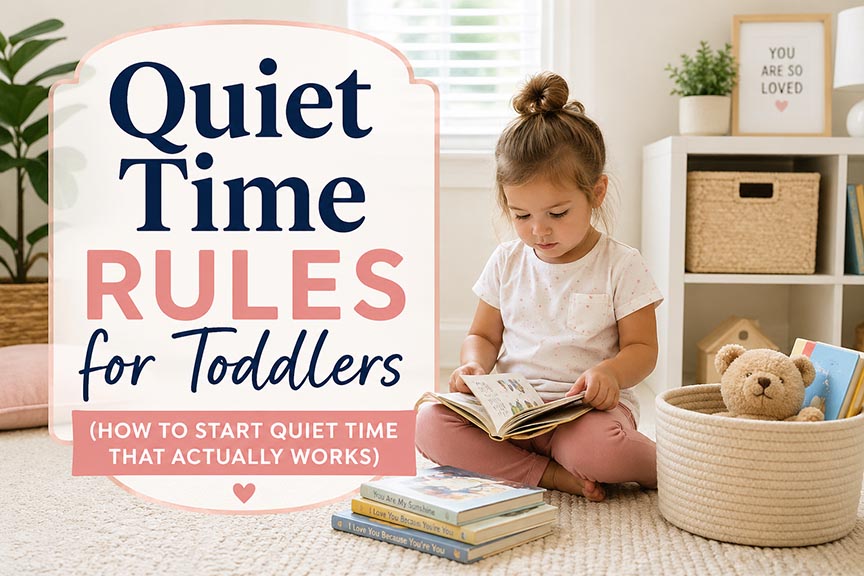
If your toddler has stopped napping—or fights naps every single day—you may be wondering what comes next. For many families, the answer is quiet time .
This post may contain affiliate links. As an Amazon Associate, I earn from qualifying purchases at no extra cost to you.
Quiet time gives your child a chance to rest, play independently, and reset during the day. It also gives parents a much-needed break. But if you simply tell your toddler to “go play quietly,” it usually does not go well.
The secret is having clear quiet time rules for toddlers that are simple, consistent, and easy to follow.
In this post, I’ll share exactly how to start quiet time that actually works, even if your toddler has never done it before.
If your toddler won’t nap anymore, you might also like these quiet time activities for toddlers that actually work .
What Is Quiet Time for Toddlers?
Quiet time is a set period during the day when your toddler stays in a safe space (usually their room) and plays calmly or rests independently.
They do not have to sleep.
Quiet time often works well for toddlers who have dropped naps but still need downtime.
Many families start quiet time between ages 2.5 and 4, depending on the child. Before deciding that quiet time isn’t working, consider whether your expectations match your child’s age. Here’s what to expect from quiet time at 1, 2, 3, and 4 years old.
Struggling with quiet time? This makes it easier.
Why Quiet Time Is So Helpful
Quiet time can help toddlers:
Recharge without needing a nap
Learn independent play skills
Reduce afternoon meltdowns
Create a predictable daily routine
Have a calm break from overstimulation
It can also help parents:
Rest or reset
Care for younger siblings
Get chores done
Work from home more easily
Enjoy a few peaceful minutes
Quiet Time Rules for Toddlers
These are the simple rules that make quiet time successful.
1. Stay in Your Room
This is usually the most important rule.
Your toddler stays in their room (or another designated safe space) until quiet time is over.
If they come out repeatedly, calmly walk them back with little discussion.
Consistency matters more than lectures.
Creating a Quiet Time Space doesn’t have to be complicated. Start with a few floor cushions or soft mat can be a simple way to begin.
2. Use Quiet Toys Only
Choose toys that encourage calm, independent play.
Good options include:
Avoid noisy toys, messy toys, or anything that causes frustration.
Need ideas? Here are some simple quiet time activities for toddlers
3. Use a Quiet Voice
Teach your toddler that quiet time means soft voices and calm bodies.
They can sing softly, talk to toys, or read aloud quietly—but no yelling or banging.
4. Keep Toys in the Room
This helps prevent wandering and distractions.
If your toddler constantly leaves the room to bring toys elsewhere, gently remind them:
“Toys stay in your room during quiet time.”
5. Quiet Time Ends When the Timer Says So
Toddlers do better when they know there is an end.
Use a toddler clock, hatch light, or visual timer so they can see when quiet time is over.
This reduces constant “Is it done yet?” questions.
We like using a simple visual timer like this one
6. Ask for Help Only If Needed
Your toddler may need reassurance at first.
Teach them they can call for you if they need the bathroom, are hurt, or truly need help—but not every two minutes because they are bored.
Want quiet time to actually work?
Grab my Quiet Time Starter Kit —with easy activity ideas and simple steps to follow.
✔ Helps reduce battles
👉 Download your free Starter Kit here
How to Start Quiet Time That Actually Works
Start Small
Do not begin with one full hour.
Start with:
10 minutes
15 minutes
20 minutes
Then slowly build up over time.
Success builds confidence.
Practice When They Are Well Rested
Starting quiet time when your toddler is overtired often backfires.
Try beginning after lunch or during the old nap window.
Prepare the Room
Make the room calm and safe.
Remove overstimulating toys and leave out a few simple choices.
Less clutter usually works better.
Keep the Routine Predictable
Toddlers thrive on routine.
Try the same pattern daily:
Lunch → potty/diaper → books → quiet time
The more predictable it feels, the less resistance you may get.
Praise Success
After quiet time, notice what went well:
“You played so nicely.”
“You stayed in your room the whole time.”
“You looked at books quietly.”
Positive attention motivates more than punishment.
What If My Toddler Hates Quiet Time?
That is normal at first.
Quiet time is a skill, not something most toddlers instantly know how to do.
If they resist:
Shorten the time
Rotate toys weekly
Stay consistent
Keep expectations calm and simple
Try again tomorrow
Most toddlers improve with practice.
Quiet Time Isn’t Working than check out this post I wrote.
Best Quiet Time Length by Age
Every child is different, but many toddlers do well with:
Age 2: 15–30 minutes
Age 3: 30–60 minutes
Age 4: 45–90 minutes
Some children rest longer, others shorter.
A simple quiet time basket with books, small toys, and a few creative activities to keep toddlers engaged independently. Want more ideas like this? Read: quiet time basket ideas for toddlers
Quiet Time Basket Idea
One of the easiest ways to make quiet time exciting is using a quiet time basket filled with special toys that only come out during quiet time.
This keeps interest high and reduces boredom.
Printable activities work especially well—see my best printable activities for toddlers
Final Thoughts on Quiet Time Rules for Toddlers
Quiet time does not need to be perfect to be worthwhile.
Start with a few clear quiet time rules for toddlers, keep expectations realistic, and stay consistent.
At first, it may feel messy. But over time, many toddlers learn to enjoy having their own peaceful break each day.
And honestly? Parents usually do too.
Ready to make quiet time easier?
Download your Free Quiet Time Starter Kit and start using them today.
👉 Get your free Quiet Time Starter Kit here
You Might Also Like