
If you’re wondering how long quiet time should be for a 1, 2, 3, or 4-year-old, you’re not alone.
Quiet time can look very different from one child to another. Some toddlers happily look at books or play quietly for an hour. Others seem to need your attention every thirty seconds.
And that’s okay.
My post contains some affiliate links so if you make a purchase after clicking on a link I may receive a commission but it will not cost you anything. Read my disclosure here.
Quiet time isn’t a test your child passes or fails. It’s simply a predictable part of the day when your child gets a chance to slow down, rest their body, play calmly, or spend some time independently.
For younger toddlers, quiet time may happen alongside a nap. By age 3 or 4, it may become more important as children gradually stop napping.
In this guide, I’ll break down quiet time by age, including what you can realistically expect from 1-, 2-, 3-, and 4-year-olds, how long to start with, and what to do when your child doesn’t want to participate.
Quick answer: There is no official quiet-time requirement for toddlers and preschoolers. Think of quiet time as flexible daytime downtime rather than a replacement for the sleep your child needs.
What Is Quiet Time?
Quiet time is a period during the day when your child is encouraged to participate in calm activities rather than running around, watching screens, or engaging in highly stimulating play.
Your child doesn’t necessarily have to sleep.
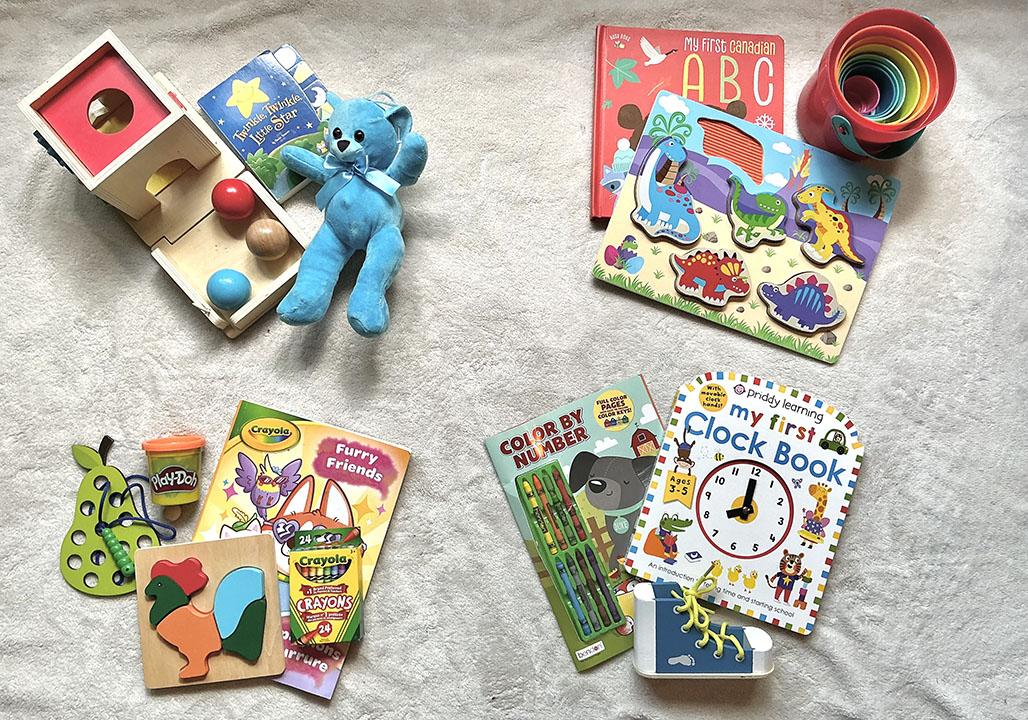
Quiet time might include:
- Looking at books
- Listening to an audiobook
- Playing with a few quiet toys
- Doing a simple puzzle
- Coloring
- Playing with stuffed animals
- Building with blocks
- Completing a simple printable activity
- Resting on a cozy mat or in a play tent
- Simply lying down and relaxing
The goal isn’t to make your child completely still and silent.
The goal is to create a predictable pause in the day.
This can be especially helpful once naps become inconsistent or disappear altogether.
If you’re just starting, you may also want to read my guide to quiet time activities for toddlers.
Quiet Time vs. Nap Time: What’s the Difference?
One of the biggest sources of confusion is thinking that quiet time and nap time are the same thing.
They’re not.
Nap time is sleep. Quiet time is rest and calm activity.
A 2-year-old might fall asleep during quiet time because they still need a daytime nap.
A 4-year-old might spend the entire time looking at books and never sleep.
Both can be perfectly normal.
The American Academy of Sleep Medicine recommends 11–14 hours of total sleep per 24 hours for children ages 1–2, including naps. For children ages 3–5, the recommendation is 10–13 hours per 24 hours, including naps.
So quiet time shouldn’t be used to force a child to give up a nap they still need.
Instead, think of it as an opportunity for downtime that can change as your child’s sleep needs change.
See the American Academy of Sleep Medicine’s child sleep recommendations
Quiet Time by Age
There isn’t one perfect quiet-time schedule for every child.
Temperament, sleep needs, personality, developmental stage, and whether your child still naps can all affect how long they can comfortably spend in quiet time.
Here’s a realistic starting point for each age.
Quiet Time for 1-Year-Olds
At 1 year old, most children are still very much in the nap-and-active-play stage.
You shouldn’t expect a 1-year-old to entertain themselves quietly in their room for an hour.
For many 1-year-olds, quiet time will happen naturally around their naps.
What quiet time might look like at age 1:
- Looking at board books with you
- Listening to soft music
- Cuddling with a stuffed animal
- Playing with a few simple toys
- Sitting on the floor with blocks
- Looking through picture books
- Playing quietly beside you
- Resting before or after a nap
At this age, independent quiet time may only last a few minutes.
That’s completely fine.
You can begin introducing the idea of calm downtime without expecting a formal quiet-time routine.
How long should quiet time be for a 1-year-old?
There isn’t a recommended number of quiet-time minutes for 1-year-olds.
Instead, follow your child’s sleep and activity needs.
If your baby still takes one or two naps, those naps are likely to provide much of the daytime rest they need.
For a 1-year-old, I would focus less on “How long can I make quiet time last?” and more on:
Can we practice slowing down?
A few minutes of looking at books or playing quietly is enough.
Best quiet-time activities for a 1-year-old
Choose activities that are simple and developmentally appropriate:
- Board books
- Soft blocks
- Large stacking toys
- Simple shape sorters
- Musical or sensory books
- Stuffed animals
- Large, age-appropriate puzzles
Always consider your child’s individual abilities and supervise activities that involve small parts or other potential hazards.

Quiet Time for 2-Year-Olds
Age 2 is often when quiet time starts becoming a useful part of the daily routine.
Some 2-year-olds are still taking a reliable afternoon nap.
Others are starting to resist naps.
And some are somewhere in between.
This is a great age to introduce quiet time without making sleep the goal.
What quiet time might look like at age 2:
- Looking through books
- Listening to an audiobook
- Completing a chunky puzzle
- Coloring with toddler-safe supplies
- Playing with stuffed animals
- Building with blocks
- Using stickers
- Playing with a quiet-time basket
- Looking through a few special toys
How long should quiet time be for a 2-year-old?
If your 2-year-old is new to quiet time, start with around 15–20 minutes.
You can gradually increase the length if your child handles it well.
Some 2-year-olds may eventually manage 30–60 minutes, particularly if they are no longer napping.
But don’t assume that because another toddler can do an hour, your child should be able to do an hour too.
The goal is to build the habit gradually.
What if my 2-year-old still naps?
Keep the nap.
If your child falls asleep during quiet time, that’s information that they may still need daytime sleep.
Quiet time doesn’t have to replace a nap just because your child has reached a certain birthday.
If you’re trying to create a quiet-time routine for a toddler who has recently stopped napping, my quiet time basket ideas for toddlers can help you create a simple setup.

Quiet Time for 3-Year-Olds
Three is often a big transition year.
Some 3-year-olds still nap.
Others have completely stopped.
And some children will nap one day but not the next.
This is exactly where a daily quiet-time routine can become useful.
Even if your child doesn’t sleep, they can still have a predictable period of slower, calmer play.
What quiet time might look like at age 3:
- Independent book time
- Audiobooks
- Simple crafts
- Coloring
- Puzzles
- Pretend play
- Building blocks
- Matching games
- Printable activities
- Stuffed-animal play
- Quiet-time toys
- Looking through a special basket of activities
A 3-year-old is also often capable of understanding a simple routine such as:
Lunch → bathroom → quiet time → snack/play
That predictability can make quiet time much easier.
How long should quiet time be for a 3-year-old?
A reasonable starting point is 30 minutes.
If your child is comfortable with it, you can gradually work toward 45–60 minutes.
Some children will happily play independently for longer.
Others won’t.
You don’t need to force a specific duration.
At this age, I would focus on teaching your child:
“This is the part of the day when we slow down.”
That’s more useful than trying to hit an exact number of minutes.
What if my 3-year-old won’t play independently?
This is extremely common.
Independent play is a skill.
Your child may need you to help them learn how to use the space and activities before they can successfully spend time there alone.
Try:
- Starting with 10–15 minutes.
- Staying nearby at first.
- Offering only a few activities.
- Using the same routine every day.
- Gradually increasing the time.
- Using a visual timer.
- Keeping special quiet-time activities reserved for quiet time.
If you’re struggling with the routine, don’t add more toys.
Often, fewer choices work better.
For more ideas, see 15 Quiet Time Activities for Toddlers That Actually Work.

Quiet Time for 4-Year-Olds
By age 4, many children are no longer napping.
But that doesn’t mean they suddenly don’t need any downtime.
Four-year-olds are still busy little people.
They may spend their days playing, talking, learning, socializing, running, and exploring.
A predictable quiet period can give them an opportunity to slow down.
What quiet time might look like at age 4:
- Reading picture books
- Listening to audiobooks
- Drawing
- Coloring
- Simple crafts
- Puzzles
- LEGO or building toys
- Pretend play
- Quiet sensory activities
- Printable activities
- Looking at books independently
- Playing with dolls or stuffed animals
At this age, quiet time can also become a wonderful opportunity to practice independent play. If you are looking for inspiration check out my guide for quiet time toys.
How long should quiet time be for a 4-year-old?
For a 4-year-old who no longer naps, 45–60 minutes can be a reasonable goal.
Some children will be able to manage longer.
Others may need a shorter period.
There’s no requirement that your 4-year-old spend exactly one hour quietly in their bedroom every afternoon.
The important thing is that the expectation matches your child.
A child who is exhausted may need sleep.
A child who is full of energy may need movement before they can settle.
And a child who is bored may simply need a better activity.
If your child does not like playing alone, playing an audiobook in the background can help entertain their minds while they play quietly with blocks or colouring activities.

Quiet Time by Age at a Glance
Here’s a simple way to think about quiet time as your child grows:
| Age | What to Expect | Starting Point |
|---|---|---|
| 1 year | Short periods of calm play, usually alongside naps | A few minutes |
| 2 years | Beginning to practice independent quiet play | 15–20 minutes |
| 3 years | More capable of independent play and predictable routines | Around 30 minutes |
| 4 years | Often able to handle a longer quiet period without a nap | 45–60 minutes |
These are starting points, not rules.
Your child’s needs may look completely different.
Does Every Child Need Quiet Time?
No.
There isn’t an official recommendation that says every 1-, 2-, 3-, or 4-year-old must spend a certain amount of time doing quiet activities.
That’s important to remember.
Quiet time is a parenting tool—not a developmental milestone.
Some children naturally spend time quietly looking at books or playing alone.
Others need much more support learning how to slow down.
Some children still nap.
Others don’t.
The goal is to create a rhythm that works for your family.
Having a dedicated quiet time space can help give your toddler something to look forward to.
When Should Quiet Time Happen?
For many families, after lunch is a natural time for quiet time.
For example:
12:00 — Lunch
12:30 — Bathroom/diaper change
12:40 — Story
12:45 — Quiet time
1:30 — Snack and active play
You don’t have to follow this exact schedule.
The most important thing is consistency.
When quiet time happens around the same time each day, your child starts to understand what comes next.
What If My Child Still Needs a Nap?
Let them sleep.
This is especially important with younger toddlers.
Sleep recommendations are based on total sleep over a 24-hour period, and naps are included in those recommendations. Children ages 1–2 are generally recommended to get 11–14 hours of sleep per 24 hours, while children ages 3–5 are generally recommended to get 10–13 hours.
If your child regularly falls asleep during quiet time, you don’t necessarily have a quiet-time problem.
You may simply have a sleepy child.
What If My Child Hates Quiet Time?
You don’t have to turn quiet time into a battle.
If your child immediately protests, try making the expectation smaller.
Instead of:
“You have to stay here for an hour.”
Try:
“We’re going to have 10 minutes of quiet time. You can choose a book or your puzzle.”
Then gradually build from there.
You can also:
- Sit nearby initially
- Use a visual timer
- Offer two activity choices
- Keep the environment calm
- Rotate activities
- Establish a predictable routine
- Give your child something special to look forward to
- Increase the duration slowly
If you’re already doing these things and quiet time still isn’t working, read What to Do When Quiet Time Isn’t Working.
What Are the Best Quiet Time Activities by Age?
The best activity depends on your child’s developmental stage.
For 1-year-olds
Choose simple activities that require little independent problem-solving:
- Board books
- Stacking toys
- Soft blocks
- Simple puzzles
- Stuffed animals
For 2-year-olds
Try:
- Stickers
- Chunky puzzles
- Books
- Coloring
- Blocks
- Simple matching activities
- Quiet-time baskets
For 3-year-olds
Try:
- Printable activities
- Puzzles
- Pretend play
- Drawing
- Audiobooks
- Building toys
- Sticker books
- Simple crafts
For 4-year-olds
Try:
- Books
- Audiobooks
- Drawing
- More complex puzzles
- Building toys
- Pretend play
- Printable activities
- Simple independent crafts
You can find more ideas in my guide to quiet time activities for toddlers. If you are looking for book recommendations than check out my guide to quiet time books.
Keep Quiet Time Simple
One of the biggest mistakes parents make is thinking they need a huge collection of activities.
You don’t.
In fact, too many choices can make quiet time harder.
Try creating a small quiet time basket with just a few activities.
For example:
- 2 books
- 1 puzzle
- 1 coloring activity
- 1 special toy
Then rotate the items every few days.
This keeps the activities interesting without turning quiet time into a giant toy-cleanup project.
If you want to make your own, see my guide to Quiet Time Basket Ideas for Toddlers.
Give Your Child Time to Learn Quiet Time
If you’ve never done quiet time before, don’t expect your child to immediately spend an hour happily playing alone.
That’s a huge expectation.
Quiet time is something children can learn.
Start with a manageable amount of time.
Make the routine predictable.
Offer a few activities.
Stay nearby if necessary.
Then gradually give your child more independence.
You may be surprised how much better quiet time becomes once your child knows exactly what to expect.
Want an Easier Quiet Time Routine?
If you’re trying to create a quiet-time routine for a toddler or preschooler who no longer naps, I’ve created a Free Quiet Time Starter Kit to make getting started easier.
It includes:
Simple quiet-time routines
Toddler-friendly visual charts
Calm activity ideas for independent play
Gentle tips for reducing quiet-time battles
Easy print-and-use pages for ages 2–4

Final Thoughts
There is no magic age when a child suddenly becomes capable of an hour of independent quiet time.
At 1, quiet time may be nothing more than looking at a book for a few minutes.
At 2, you’re beginning to introduce the routine.
At 3, your child may be ready for a more predictable period of independent play.
And by 4, quiet time may become a regular part of the day even when naps are long gone.
The most important thing is to meet your child where they are.
Quiet time isn’t about forcing your child to be quiet.
It’s about giving everyone a chance to slow down.
And sometimes, even 20 peaceful minutes is enough to make the rest of the afternoon feel completely different.


