
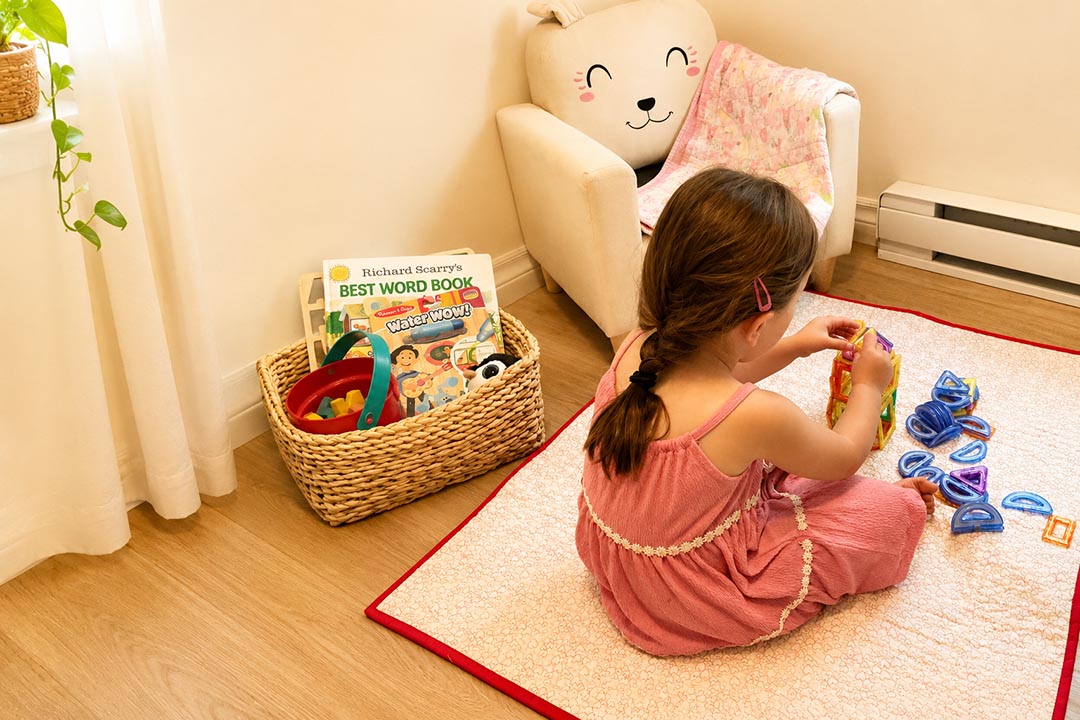
If your toddler has officially dropped their nap, you probably know exactly what happens next. They’re exhausted by dinner. You’re exhausted by lunch. And everyone desperately needs a break. That’s where quiet time comes in.
The secret isn’t forcing your toddler to sit still for an hour. It’s giving them toys that encourage calm, independent play instead of making them more excited.
After trying dozens of activities with my own toddler, I’ve found that simple, open-ended toys work far better than noisy, flashing, or battery-operated ones.
In this guide, I’ll share my favorite quiet time toys that actually keep toddlers engaged—without overstimulating them.
If your toddler has dropped naps than it’s a great time to introduce Quiet Time.

Why Quiet Time Toys Matter?
Quiet time toys encourage children to slow down, focus, and play independently.
Open-ended toys like:
- building blocks
- puzzles
- magnetic tiles
- pretend play sets
These toys toddlers engaged without overwhelming their senses.
Best of all, having a dedicated basket of quiet time toys gives your child something special to look forward to each day. Having a dedicated Quiet Time Space can also help create a predictable routine.
What Makes a Good Quiet Time Toy?
Not every toy belongs in a quiet time basket.
The best quiet time toys are:
- quiet (obviously!)
- open-ended
- easy enough to use independently
- calming rather than exciting
- don’t require adult help
- have very few pieces
- don’t make a huge mess
Avoid:
- toys with lights and music
- noisy electronic toys
- toys with dozens of tiny pieces
- anything that encourages running around
How Many Quiet Time Toys Should You Offer?
One common mistake parents make is putting out every toy they own.
Instead, choose just 5–7 toys and rotate them every week or two.
Limiting choices actually helps toddlers stay engaged longer.
The best quiet-time activities can change as your child grows. See what to expect from quiet time at 1, 2, 3, and 4 years old.
1. Magna-Tiles
Children can quietly build towers, castles and simple houses with this magnetic tiles for long periods without needing help.
But if you have been doing Quiet Time for a while and still are having trouble check changing your routine instead of the toys may help.

2. Wooden Blocks
Classic wooden blocks never go out of style and encourage creative, calm building.
3. Melissa & Doug Water Wow Books
These reusable water coloring books are nearly mess-free and perfect for independent play.
The secret to a succesful Quiet Time is having set rules.

4. Chunky Wooden Puzzles
Large knob puzzles help toddlers stay focused while practicing problem solving.
5. Felt Story Board
Toddlers love moving felt pieces around to create their own little stories.
6. Sticker Books
Reusable sticker books provide lots of entertainment without making a huge mess.
7. Dot Marker Activity Book
If your child can safely use dot markers independently, these dot marker books make wonderful quiet time activities.
8. Lacing Cards
Lacing develops fine motor skills while naturally slowing children down.
9. Soft Baby Dolls
Many toddlers enjoy quietly caring for a baby doll during rest time.
10. Animal Figurines
Small sets of farm or woodland animals inspire imaginative play without requiring many accessories.

11. Magnetic Drawing Board
Children can draw endlessly without wasting paper with these magnetic drawing boards.
12. Busy Board
Busy boards with zippers, buckles and switches are perfect for toddlers who enjoy hands-on activities.
Some new Quiet Time Activity ideas could also help create a succesful quiet time break.
13. Play Silks
Play silks become capes, blankets, rivers and tents using only imagination.
14. Wooden Train Set
A small train set encourages quiet storytelling and building.
15. Quiet Books
Busy books with buttons, snaps and felt pieces provide lots of independent entertainment.
16. Matching Memory Cards
Simple picture matching games can be played independently by older toddlers.
17. Wooden Stacker
These beautiful open-ended stacking toys help teach size, shape, color, and matching skills.
18. Foam Pattern Blocks
Pattern blocks encourage creativity while staying relatively quiet.
19. Simple Dress-Up Clothes
A few scarves or hats often work better than an entire costume box. But costumes can also be a great opportunity for role play in their favorite jobs such as doctor or fireman.
20. Snap beads
Snap beads are great for older toddlers who don’t put things in their mouth. It will keep them entertained for a long time making necklaces and bracelets.
21. Finger Puppets
Children naturally invent stories with finger puppets.
22. Scribble tablets
These rainbow scribble tablets are great at holding a toddlers attention. I keep mine in my purse for when I am out shopping or at an appointment and I need my toddler to sit still.
23. Soft Stuffed Animals
Many toddlers enjoy arranging, cuddling and pretending with stuffed animals during quiet time.
24. Picture Search Books
Search and Find Books like “Can You Find It?” encourage concentration and independent exploration.
25. Quiet Time Basket
Sometimes the best toy isn’t a toy at all.
Fill a basket with 5–7 rotating activities and only bring it out during quiet time. Keeping these toys special in a quiet time basket makes them feel new every day.

Quiet Time Toy Rotation Tips
A simple rotation keeps toys exciting without buying anything new.
Try rotating:
- one puzzle
- one building toy
- one pretend play toy
- one activity book
- one stuffed animal
- one creative activity
Frequently Asked Questions
What age is quiet time for?
Most children transition from naps to quiet time between ages 2½ and 5.
How long should quiet time last?
Start with 15–20 minutes and slowly work toward 45–60 minutes.
Should quiet time toys stay available all day?
No. Keeping them special makes them much more engaging.
Can I play music in the background?
Gentle music that encourages rest and relaxation can help a child focus. Audio books are also a nice alternative that helps build your child’s imagination while their hands play with dolls and toys.
Final Thoughts
Quiet time doesn’t have to feel like punishment—for you or your toddler.
The right toys encourage calm, independent play while giving everyone a chance to recharge.
Remember, you don’t need 25 new toys. Start with just a few favorites, rotate them regularly, and keep them reserved for quiet time only.
You’ll probably be surprised how much longer your toddler stays happily occupied.


