
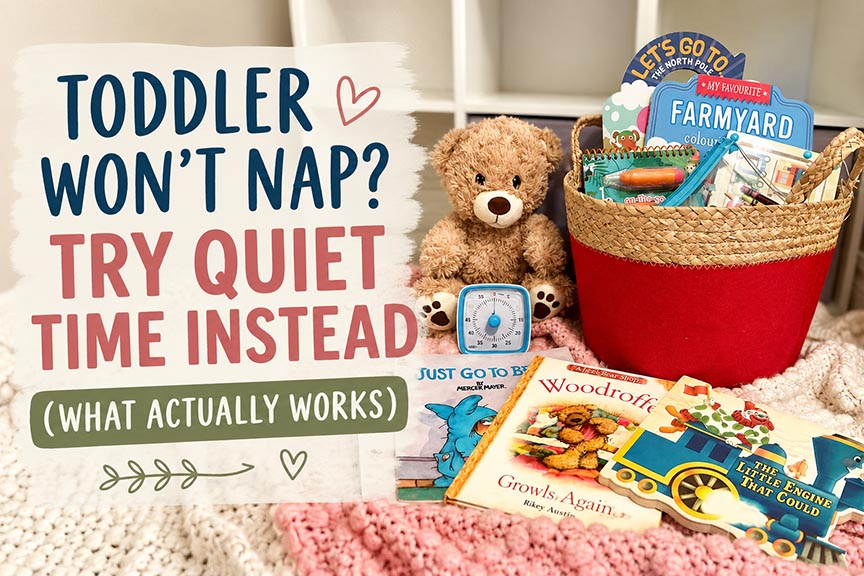
If your toddler suddenly refuses to nap… you’re not alone.
One day they’re sleeping peacefully, and the next?
They’re singing, jumping, asking for snacks, and doing everything except napping.
I remember thinking:
“If she doesn’t nap… when do I get a break?”
The good news?
You don’t have to lose that rest time completely.
You just need to shift from naps → quiet time.
And when done right, quiet time can actually work better than naps.
My post contains some affiliate links so if you make a purchase after clicking on a link I may receive a commission but it will not cost you anything. Read my disclosure here.

What Is Quiet Time (And Why It Works)
Quiet time is a set period each day where your toddler rests independently in a calm space—without needing to sleep.
It gives them:
- A mental break
- Time to reset
- Independent play skills
And it gives YOU:
- A predictable daily break
- Time to reset your home or work
- A calmer afternoon
👉 If your toddler is fighting naps, it’s often because they’re developmentally ready for less sleep—but still need downtime.

Signs Your Toddler Is Ready to Drop Naps
- Taking 1+ hours to fall asleep at nap time
- Skipping naps but still staying awake all day
- Bedtime becoming a struggle
- Playing instead of sleeping consistently
If this sounds familiar, it’s time to transition.
How to Transition from Naps to Quiet Time
1. Start at the Same Time Every Day
Keep your nap routine—but change the expectation.
Same time. Same space. Different goal.
Consistency is what makes this work.
Creating a Quiet Time Space doesn’t have to be complicated. A small corner or floor cushion is a great start.

2. Use a Visual Cue (This Is Key)
Toddlers don’t understand time.
You need something concrete like:
- A timer
- A visual clock
- A simple rule like “stay in your room until the light turns green”
3. Start Small (Then Build Up)
Don’t jump straight to 1–2 hours.
Start with:
- 15–20 minutes
- Then slowly increase over time
This prevents frustration and resistance.
Not sure whether your child is ready for independent quiet time? Here’s what quiet time can realistically look like at ages 1, 2, 3, and 4.
4. Set Clear Boundaries
Before quiet time starts, say something like:
“You don’t have to sleep, but you do need to stay in your room and play quietly.”
Repeat this consistently.
5. Choose the Right Activities (This Makes or Breaks It)
Not all toys work for quiet time.
You want:
- Simple
- Open-ended
- Not overstimulating
I shared my favorite low-mess activities in:
15 Quiet Time Activities for Toddlers That Actually Work
Quiet Time Activities That Actually Work
- Board books
- Puzzles
- Stuffed animals
- Coloring or crayons
- Quiet sensory bins
- Simple building toys

Create a Quiet Time Basket (Game Changer)
One of the easiest ways to make quiet time successful?
👉 Use a dedicated quiet time basket
This keeps things:
- Special
- Rotated
- Not overwhelming
Only bring it out during quiet time so it stays exciting.
Looking for more easy ideas? Read:
Quiet Time Basket Ideas for Toddlers

Feeling overwhelmed trying to set up quiet time?
I made a simple Quiet Time Starter Kit to help make it easier.
It includes:
✔️ simple routine ideas
✔️ activity ideas
✔️ trouble shooting guide

Common Quiet Time Mistakes (That Cause It to Fail)
Let’s be honest—quiet time doesn’t fail because toddlers can’t do it.
It fails because of setup.
Avoid these:
❌ Too many toys
Overwhelm = chaos, not calm.
❌ No structure
If it changes daily, they won’t follow it.
❌ Expecting too much too soon
Quiet time is a skill—it takes practice.
❌ Giving in early
If you end it the moment they protest, they learn to push harder next time.
If you need more help for when Quiet Time Isn’t Working than check out this post I wrote.
What to Do If Your Toddler Keeps Leaving Their Room
This is very common.
Stay calm and consistent:
- Walk them back without a big reaction
- Repeat the rule briefly
- Avoid long explanations
It may take a few days—but consistency wins.
These quiet time rules helped us stay consistent without constant battles:
Quiet Time Rules for Toddlers
How Long Should Quiet Time Be?
Every child is different, but a good goal is:
- Start: 15–20 minutes
- Build to: 45–90 minutes
Even 30 minutes of quiet time can make a huge difference in your day.
The Real Benefit (That No One Talks About)
Quiet time isn’t just about giving you a break.
It teaches your child:
- Independent play
- Emotional regulation
- How to slow down
These are skills they’ll use for years.

Make Quiet Time Easy (Free Printable)
If you’re feeling overwhelmed trying to set this up…
I made something simple for you
It includes:
- A simple daily routine
- Activity Ideas
- Tips to make Quiet Time easier
- This helps your child understand expectations—and makes quiet time actually stick.


